Episode Transcript
[00:00:00] Speaker A: That's my personal tip that I give people, is to look for somebody who has lived experience with neurodivergence.
And I also tend to tell people to look for somebody who's also trauma informed and.
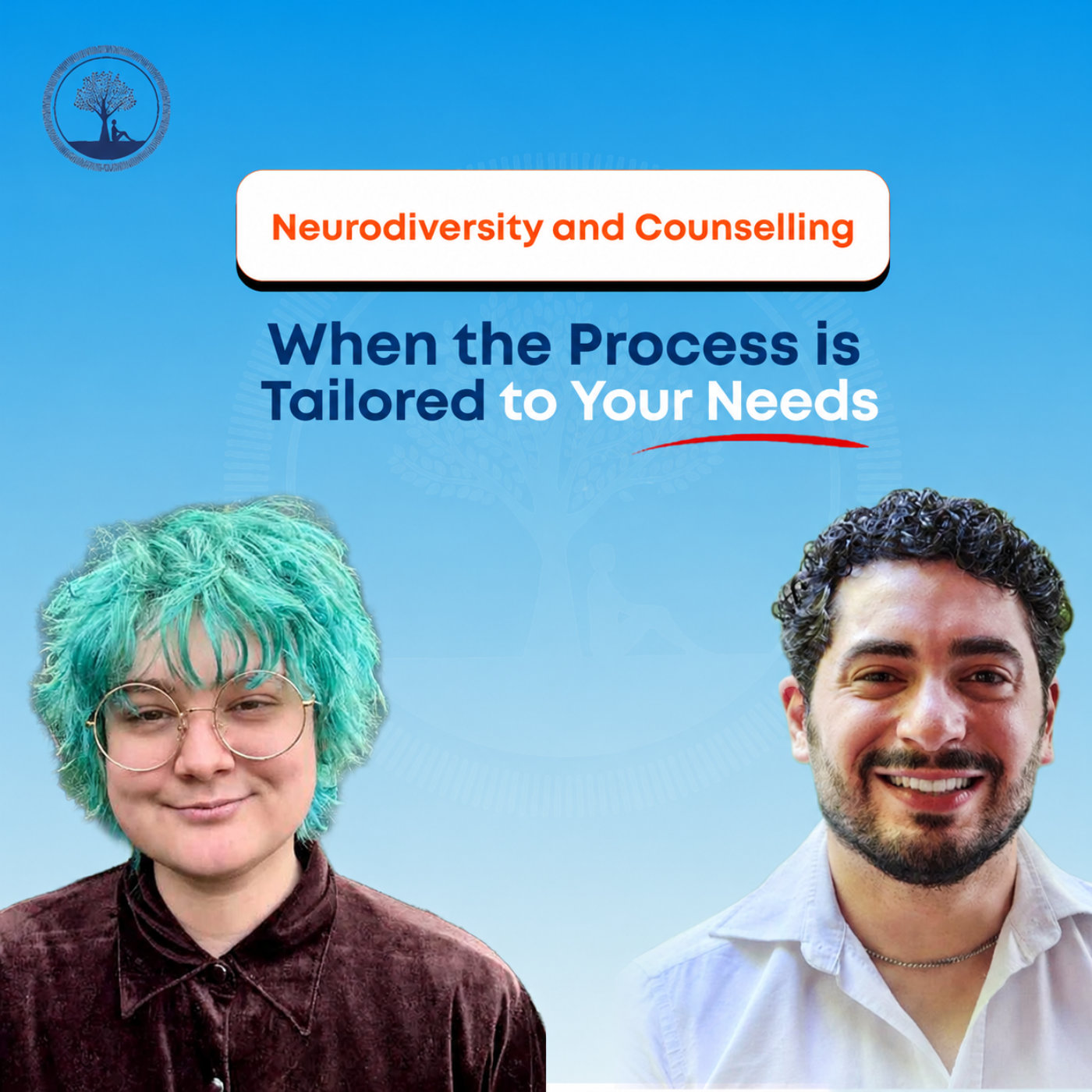
[00:00:19] Speaker B: Hello, and welcome to Safe Place Therapy Podcast, your safe place to talk. I'm Daniel Di Pietro, here with Luca and today we are talking about affirming your neurodiversity in a counseling space and what that may look like.
Firstly, we want to pay respects to the traditional custodians of the land in which we work and live on, which is the WI people of the Kulin Nation.
And we pay our respects to their elders, past and present, and name that land was never ceded and that this was and always will be first nations land.
So to start us off, Luca, can you, I guess, tell the viewers here a little bit about who you are and what you do here at Safe Place Therapy?
[00:01:06] Speaker A: Yes. So I am Luca, they them. I'm a provisional psychologist at Safeplace in Footscray.
Won't be provisional for long. Fingers crossed. But, yeah, for now, I'm still provisional.
Yeah. So I work a lot with neurodivergence.
I myself am neurodivergent, so that's definitely an area of interest for me.
I also work a lot with LGBTI people and a lot with trauma.
Trauma stuff as well. That's my area of focus. Great.
[00:01:44] Speaker B: And you know, it's such a broad area of focus as well in terms around neurodiversity. Can you talk a little bit in terms of how folk who feel that the neurodiversity is kind of affirmed in session? I guess what is that you currently do or how do you make people's neurodiversity affirmed in session?
[00:02:07] Speaker A: So it's very unique to the individual.
All of my sessions look very different from person to person, so. So for one person, we might be doing a session that's focusing on social stuff, or another person will be doing more like regulation skills.
It really just depends on the individuals that I'm working with and what works for them. Yeah, I'm very flexible in the way that I work.
So that means sometimes changing elements of the room that I'm working in.
That means changing kind of the approach that I take. The language that I use, it's just very, very tailored to each individual that I work with. So, yeah, it's very, very different.
So that means that in one day I'm doing a lot of different things.
[00:03:03] Speaker B: And when you're talking about changing the room, can you talk a Little bit about that, why that's so important for some folks.
[00:03:10] Speaker A: Yeah, so I personally am very sensitive to light. So a lot of my rooms are quite dark. I find that quite relaxing as well.
Not super, super dark but like we don't use the big light, we never use a big light.
We use lamps or natural lighting.
But yeah, I just kind of tailor the rooms around my clients sensory preferences.
So that means, for example, I don't eat my lunch in the room that I work in. I usually eat my lunch in the lunchroom or somewhere else. Just because of the smell of the food for some people can be quite distressing or uncomfortable. Yeah, I just really tailor it to the people that I work with. So that can be like if we're doing something that might be loud.
I work a lot with young people so we do puzzles and some more like practical stuff in that situation. I try and kind of think forward to avoid loud noises or sudden movements or kind of give them a heads up if I'm going to put something on the table that's really loud so they can kind of prepare themselves so that just kind of thinking ahead to try and tailor to the people that I work with and their like sensory preferences and.
Yeah, that's kind of what I mean by that.
[00:04:33] Speaker B: I mean it sounds really beautiful that you're, you're thinking about, I guess, how the person is in the space, how they feel supported, what would best, I guess help facilitate the work that you do in what. So, so in terms of, I guess, you know, you're naming some of the sensory aspects there in terms of some of the work with the jigsaws, making sure that it's not allowed space.
You know, it sounds like that you're really thinking ahead so that the work that you're actually doing with the sensory tools maybe is effective.
[00:05:05] Speaker A: Yeah, it is because I'm very big on my clients feeling as safe and stable as they can in the room.
For a lot of people, especially neurodivergent people, therapy is very scary and destabilizing.
You're basically going into this room that you may or may not have seen before and talking to someone that you've never met about some really deep and personal issues. And for some people that's a lot.
So I try and make the space as consistent as possible, as accessible as possible, as comfortable as possible to just try and make it a little bit easier to actually engage in the meaningful part of the therapeutic process.
And sometimes that can take time to build that rapport and to have that feeling of safety and stability in the room. But that's also something that I prioritize, is that I work at the pace of my client. So for some clients, it takes like one session and they're ready to get into it, but for some people, it can take upwards of a year. And that's okay.
[00:06:13] Speaker B: Yeah. And really highlighting that, that's okay.
[00:06:16] Speaker A: Yeah, yeah, yeah. That's something I definitely let people know in our first session that I. We go at their pace.
Sometimes that means we are going at a certain pace and then we slow down when we get to certain bits. Or sometimes it's kind of unpredictable. But it's important for me to be flexible so that we can make it as accessible as possible.
[00:06:39] Speaker B: Yeah. Great.
And in terms of, I guess, the sensory. On having someone's neurodiversity affirmed in the space, what do you feel are some questions or ways of working that you may have heard from clients around their experiences where it hasn't been affirmed?
[00:07:00] Speaker A: Yeah. So in that regard, I've had a few clients tell me of experiences where they have voiced discomfort about certain elements of the room, and they have been told that they just need to get used to it or to push past that discomfort because they need to build their distress tolerance, which is something that we do in therapy, but in that context is quite distressing and inappropriate.
Yeah. And very invalidating as well.
It also kind of puts that barrier up as a neurodivergent person. It tells you that you're not able to be fully safe in that environment that you can't unmask because you're going to be met with that sort of rejection and invalidation.
So, yeah, kind of meeting neurodivergent people where they're at with therapy is really, really important to build that sense of safety and rapport so that you can actually get past. Past a certain point and actually start doing the work together.
[00:08:02] Speaker B: Yeah, yeah. And what I'm hearing is that a real safe therapeutic relationship where it's almost like that we're kind of affirming some of the, I guess, protective measures that folk have and not sham.
[00:08:15] Speaker A: Yes, yes. It's very important that we don't try and pathologize neurodivergence. We don't try and fix things and try and make it go away.
We try and help the person function at their best within the context that they're in and not change their protective behaviors or their behaviors that some people may see as being related to their neurodivergence, because there's nothing wrong with Being neurodivergent, uh, it's just a different way of experiencing and existing. So, yeah, it's completely inappropriate and super harmful to tell neurodivergent people. Like, you need to change who you are. You need to change X, Y, Z about yourself, because that's just. Yeah, you would not tell that to someone who's not neurodivergent. So you're not gonna do that to a neurodivergent person.
[00:09:05] Speaker B: Yeah. And. And so I'm really hearing there that it's. It's. Rather than kind of looking at it more of a. Kind of a deficit, you're really kind of honoring the person that comes into the room.
The nuances that make that.
[00:09:18] Speaker A: Yes, I'm very strength based in my approach.
We don't really view things as deficits within the context. Obviously, it creates a bit of a functional distress or impairment, but we try and find the strengths of the person and how that can be used to increase their quality of life and help them reach their best potential and best self.
Yeah, the traditional approach to neurodivergence, which highlights deficits, I have a lot of problems with that.
And, yeah, it's more about the strength of the person and honoring that. Neurodivergence is still a disability, and that does come with barriers, but it's not a fault within the self. It's not that there's something inherently wrong with you as a person. It's just your brain is operating a different way.
[00:10:20] Speaker B: And that must be so empowering for a lot of folks to hear from you.
[00:10:24] Speaker A: I'm sorry.
I hope so.
[00:10:27] Speaker B: Particularly around perhaps, you know, things that they may hear from others that may kind of speak more into that kind of deficit.
It sounds like that, again, your offerings are all kind of safe spacey for them to be there.
[00:10:41] Speaker A: Yeah. And that's what I kind of want to bring to my sessions with my clients, is to empower the self and.
Yeah. Find your strengths as a person and your values as a person and kind of bring that up and help you use those things to, like, increase your agency as a person, to increase your quality of life, as I said.
Because it can be really hard navigating the world as a neurodivergent person and being constantly told that the way you're experiencing or expressing yourself is a deficit or a negative, when it isn't necessarily that at all.
[00:11:20] Speaker B: No, no. And, you know, I. I heard something recently or read about something recently around, you know, there's so many different varieties of trees and, you know, in the way that they grow and the way that they're formed and you know, they're accepted in all their kind of forms. And it's almost like we pathologize the way people brains are kind of formed in that way or the way that they interpret the world gets looked upon quite differently.
And I really like the idea of, I guess, nature in all its nuance kind of being accepted in all forms, which I'm saying.
[00:11:56] Speaker A: Yeah, yeah.
I often discuss that sort of thing with my clients when it comes to like the deficits and difficulties that come with deficits that come with being neurodivergent. Because as I said before, it is important that we still honor the fact that it is still a disability and there still are hurdles that challenge. Yeah. And challenges that come with being neurodivergent. But it is that way because of the context that we're in rather than a deficit within the individual.
Um, if you were to take a neurodivergent person out of the neurotypical context and put them in a neurodivergent context, then it would be a completely different picture that we're looking at. So, yeah, I'm, I'm very. It's very important for me to remove the shame that a lot of neurodivergent people or help alleviate the shame that a lot of neurod. Neurodivergent people feel around being neurodivergent.
Because there is a lot of like guilt and shame and self blame and judgment around being neurodivergent, especially in like diagnosed people.
[00:13:07] Speaker B: Yeah, yeah. And you know, when we're talking about, I guess, affirming neurodiversity in the therapy space here, is there anything that you feel like that folk looking to seek support should be looking for within a therapist or that being a bio or anything else.
[00:13:25] Speaker A: I would always look for for a therapist who either has lived experience as being neurodivergent themselves or maybe has a family member. Well, you might not know that, but has lived experience to some capacity.
That's kind of what I look for personally when I'm looking for people to refer my clients to is that's my first preference is lived experience of neurodivergence.
[00:13:51] Speaker B: And why is that so important?
[00:13:53] Speaker A: Do you feel when you're neurodivergent yourself or you have that lived experience of neurodivergence, it delivers a different kind of experience than somebody who has not had that lived experience.
That's my personal opinion.
[00:14:10] Speaker B: That makes a lot of sense. It's that sense around that perhaps someone can have a lot of theoretical knowledge.
We as mental health practitioners are trained in a lot of things, but actually going through certain things is a completely different experience all in itself.
[00:14:25] Speaker A: Yeah. And there's like, certain things that you can have all the academic knowledge in the world, but unless you've actually gone through it yourself, you will never fully get it on the same level as somebody who has gone through that or has navigated that with someone close in their life.
So, yeah, that's my personal tip that I give people, is to look for somebody who has lived experience with neurodivergence.
And I also tend to tell people to look for somebody who's also trauma informed and.
Yeah. Aware of those sorts of things because often there's a lot of crossover between those things.
[00:15:04] Speaker B: Yeah, and I'm curious around that as well. But just in terms of, I guess that that lived experience aspect, you make a lot of sense, because this, as you mentioned, is the way someone lives, rather than this being perhaps something that occurs when faced with a certain situation.
It's a constant way of being.
And so how can someone relate to that if they haven't experienced something somewhat similar?
[00:15:29] Speaker A: Yeah, it brings a different sort of understanding, a depth to an understanding that you can't really get from just reading and academics and that sort of thing. Not obviously removing the value in that. There is a lot of value in that. But the lived experience when it comes to neurodivergence can sometimes be a really important part of building rapport, especially for people who have felt chronically invalidated throughout their life and misunderstood. To have somebody who not only has that clinical experience and that academic experience, but they have the lived experience of they really understand what it's like to have been that young person who was chronically misunderstood. Like, they have been there themselves.
[00:16:12] Speaker B: Or they get it.
[00:16:13] Speaker A: Yeah, they get it on a different level.
Because, yeah, a lot of neurodivergent people, they feel chronically misunderstood and invalidated, and they can rightfully so be uncomfortable thinking about going into a therapeutic dynamic with someone who is not neurodivergent. They can be that almost like a sort of a stress response at the thought of, if I go into this room with this person who's not neurodivergent, am I gonna get treated the same way that I have been treated in the past? Am I gonna be invalidated? Are they just gonna tell me the same things that I've already.
Because they just don't get it. And that's understandable that people have that
[00:16:56] Speaker B: stress and that fear and when you're talking around, I guess, the challenges and particularly around trauma experiences there, can you talk a little bit into that neurodiverse both when you kind of correlate those two?
[00:17:10] Speaker A: Yeah. So there's a lot of crossover between trauma and neurodivergence.
When we're talking about significant like big T trauma, there is unfortunately quite a crossover between neurodivergence and that as well.
But even little T trauma. So things that don't fall into that category.
There is a lot of crossover in all ways with trauma, with trauma informed practice, a lot of the kind of like skills and techniques and ways of being present in the room and setting up our rooms and stuff like that. There's a lot of overlap with neurodivergent working with neurodivergence.
And even if somebody doesn't have big T trauma, they may still benefit from having that trauma informed approach to their practice.
But I.
A lot of neurodivergent people have experienced trauma just from being neurodivergent, because being neurodivergent in a world that is not built for you is inherently quite traumatic. So that's why I always kind of suggest looking for people who are trauma informed, because very often there is at least a little bit of a trauma
[00:18:35] Speaker B: component with neurodivergence and that trauma informed practice. I'm hearing just one of the elements you named is environmental in terms of, you know, how the therapist kind of sets up the space and accommodates for another person. What are some other ways you feel like it is quite trauma informed way of working with the environment? Yeah. Or even outside that.
[00:18:58] Speaker A: Yeah. So this would be a really good example of how it kind of crosses over. So one thing that we kind of are taught with trauma informed practice and trauma informed care is the setup of the.
So I personally will always sit in the chair that is one closest to the door. But also I have my back to the door. And my clients will always sit in a section of the room, unless of course, they choose that chair. Sometimes that's the chair they want to sit in and that's fine. But I will usually suggest the chair where they will have a view of the door and they have a clear exit path.
This is so that my clients know that they are free to leave at any time. If they are distressed, they can get up and walk out. Also, for safety, I'm closest to the door, so if I need to leave, I can. But it's important that my clients even subconsciously are able to see an exit at all times. During the session.
And yeah, another thing that I would implement and that I do implement is I kind of give.
I have a structure to my sessions so I usually reserve the last five or 10 minutes for a designated kind of regulation space. Especially if we're having a really intense session where we're talking about some really intense stuff.
And I flag this with my clients in our first sessions that this is the way that I work.
I have a 5 or 10 minutes reserved time slot at the end of our session where I kind of park what we're talking about and we take that time to talk about something neutral or positive so that they can kind regulate themselves a little bit before they go out into the world. Because I don't personally find it. It doesn't sit well with me to just talk about something really intense and then just send someone out.
So yeah, that's also something that I do.
And also make sure that the people that I work with are able to practice autonomy and self advocacy at any point that is possible.
I always give, if we're doing some more hands on activities with young people, for example, I will always give options for activities so that I promote independence. I also as much as possible try and give people a bit of a warning or a heads up if there's anything that's unanticipated.
If there's a change to the routine or even in the room, if there's like unexpected noises outside, I will let the client know ahead of time just so that they can kind of. So that's kind of an overlap between trauma informed care and working with neurodivergent people.
[00:21:42] Speaker B: What I'm really hearing is beautiful about that is that it's collaborative.
[00:21:45] Speaker A: Yes.
[00:21:46] Speaker B: And that it's very much kind of. It's a two way street.
[00:21:50] Speaker A: Yes. Yeah. I'm. It's very important for me to foster my clients sense of independence and advocacy and to help them develop that sense of trust in themselves so that they can advocate for themselves and they can actually take care of themselves.
That's a very big part of the way that I work is to promote that.
Because a lot of neurodivergent people, they don't feel like they can do that. They don't. They constantly are second guessing themselves or they're constantly invalidating themselves. So it's really important that in whatever way I can, I promote that feeling of independence and autonomy and advocacy.
[00:22:28] Speaker B: Yeah. Particularly you know, tying everything in. It sounds like, you know, being in that neurotypical day to day structure and giving them that advocacy of Some freedom outside of that too. That it's okay to have some freedom outside of that?
[00:22:43] Speaker A: Yes, yes. I, I encourage my clients to unmask in session as. As much as they can for those
[00:22:51] Speaker B: that maybe listening that don't know what masking is, do you?
[00:22:55] Speaker A: Oh, so masking is a behavior that neurodivergent people sometimes subconsciously, sometimes consciously engage in where they kind of put on a bit of a.
Like a mask, for lack of a better word, to navigate the day to day. So that's how people perceive that. Yeah, to like kind of. It's a protective mechanism.
So sometimes you're aware of it, sometimes you're not, and sometimes it can really, really run deep. Especially if you are late diagnosed and you've been masking your entire life, there'll be things that you do that you don't even realize that you do that are part of masking behaviors.
But yeah, it's. It's a. It's like camouflage in. In the natural world where you are just trying to like blend in so that you are able to survive with everybody else and be liked and all that sort of thing. So in my sessions, I encourage for people to try and unmask as much as possible.
I don't enforce eye contact. I let them know that I'm pretty bad at eye contact myself.
And I encourage people to bring in, if they have comfort items, they're more than welcome to bring in comfort items.
If people need a session or that just need that space to just sit there and color in or something like that, or just talk about their special interest for 40 minutes, that's what we're gonna do.
And yeah, I encourage people to just be themselves without having to worry about am I gonna offend this person?
Am I gonna push them away by just being myself without having to put that mask up.
Yeah, my space is very, very chill and yeah, accommodating as much as possible.
[00:24:50] Speaker B: Well, it sounds like a beautiful space then just in terms of, I guess, the pushing away aspect. I did also want to ask about rsd, which is projection, sensitivity, dysphoria. A little bit about. For those listening here, I guess. Can you talk a little bit about that experience?
[00:25:11] Speaker A: Yeah. So RSD is experienced by neurodivergent people, as you said, rejection, sensitivity, dysphoria. So a common misconception is that it is kind of just getting a bit bummed out when you get rejected or you perceive rejection. But there's a lot more depth to it than that and it can be quite nuanced and complex. As well.
So not everybody who's neurodivergent experiences rsd. Some people experience it to a pretty intense degree while other people don't. And it depends on the situation. It's very like, yeah, very nuanced. But it's basically when it boils down to it, it's either actual or perceived rejection and then that can kind of lead to quite an elevated distress or stress response in the person.
So it's different for every person.
Some people might express it in some ways, some people might express in other ways, but it is usually a very intense response. It's not just a feeling of disappointment or like sadness. It is an all consuming, really like distressing experience. It's very, very intense.
And it can be like, yeah, it can lead to meltdowns, it can lead to mental health issues. It is more than just, oh, I'm a bit bummed out. It is a full body like experience. It's very intense. Yeah.
[00:26:43] Speaker B: Yeah. Wow. And I can imagine for some folk it could stop them from engaging in social supports or stop them, I guess, impacting their functioning as you kind of described.
[00:26:53] Speaker A: Yes. Yeah, for sure. It can lead to people being hesitant to live their day to day and engage socially or it can really impact functional capacity and ability to just go out and work and go out to the store and make phone calls. Like it can really get into the nooks and crevices of your, of your life.
And it can also make it difficult to actually go and seek out help therapeutically. And, and that kind of loops back to what I mentioned before about the lived experience thing with neurotypical people. And the concern that some neurodivergent people have can be tied into that RSD that they've experienced like growing up at school or constantly being rejected, constantly being othered and how that can create some trauma and stress and make it so that there's like this barrier of like, if I go to therapy, am I just going to get told that it's in my head or that I'm making it up or I just need to get over it or I just need to change everything about myself so that other people are comfortable.
So it can really be quite a intense force in somebody's life.
[00:28:07] Speaker B: Yeah. And for those listening, is it something that you feel like with a neuroaffirming therapist that they can work on in terms of their rst? Is that something that's workable for those?
[00:28:20] Speaker A: Yeah, for sure. I think that with the right therapist everything can be worked on and once
[00:28:30] Speaker B: it's not Like, I have to kind of be this way.
[00:28:32] Speaker A: No, no, it's more about learning tools to kind of navigate that. To kind of understand that experience of rsd, the function of it, where it comes from, where it, like, comes up for you, how it looks like in your life. And with a therapist, you can start to try and, like, curve out those details and.
Yeah. Come up with some. Some coping skills or supports or start to navigate it in a bit of a different way so that it doesn't create such a functional impact in your life. Doesn't have as much control.
[00:29:05] Speaker B: Yeah, yeah. And it allows for connection.
[00:29:08] Speaker A: Yeah, yeah. It definitely would increase quality of life, increase your ability to be yourself with a little bit less fear, be more authentic, and hopefully try and mask a little bit less.
[00:29:25] Speaker B: Yeah.
Well, Luca, I could just go on for another half hour with you or so you know. It's been absolutely wonderful having you here on. On the Safe Place Therapy podcast.
[00:29:38] Speaker A: Thank you for having me.
[00:29:40] Speaker B: You're welcome. And if you'd like to see Luca, you could find them on the Safe Place Therapy website.
And again, I'm your host for today, but Stuart will be back, Stuart Shevton, for the next few episodes, so do keep an ear out for that. And this has been Safe Place Therapy Podcast, your safe place to talk.
Bye for now.
[00:30:03] Speaker A: Bye.
[00:30:04] Speaker B: Bye.